Domain protestschild.de kaufen?
Wir ziehen mit dem Projekt
protestschild.de um.
Sind Sie am Kauf der Domain
protestschild.de interessiert?
domain@kv-gmbh.de · 0541-91531010
Domain protestschild.de kaufen?
Was ist Game Development 2?
Game Development 2 ist ein weiterführender Kurs oder eine Fortgeschrittenenstufe im Bereich der Spieleentwicklung. In diesem Kurs werden fortgeschrittene Techniken und Konzepte des Game Designs und der Programmierung behandelt, um komplexe und anspruchsvolle Spiele zu entwickeln. Es kann auch Themen wie 3D-Grafik, Künstliche Intelligenz oder Multiplayer-Entwicklung abdecken. **
Wo liegt der Unterschied zwischen Game Design und Game Development?
Game Design bezieht sich auf die Konzeption und Gestaltung von Videospielen, einschließlich der Entwicklung von Spielmechaniken, Level-Design, Storytelling und Charakterentwicklung. Game Development hingegen bezieht sich auf die eigentliche Programmierung und Umsetzung des Spiels, einschließlich der Entwicklung von Code, Grafiken, Sound und Benutzeroberfläche. Während Game Design sich auf die kreative Seite des Spiels konzentriert, liegt der Fokus beim Game Development auf der technischen Umsetzung. **


Ähnliche Suchbegriffe für Java-Game-Development-with
Top-Angebote
Produkte zum Begriff Java-Game-Development-with:
-
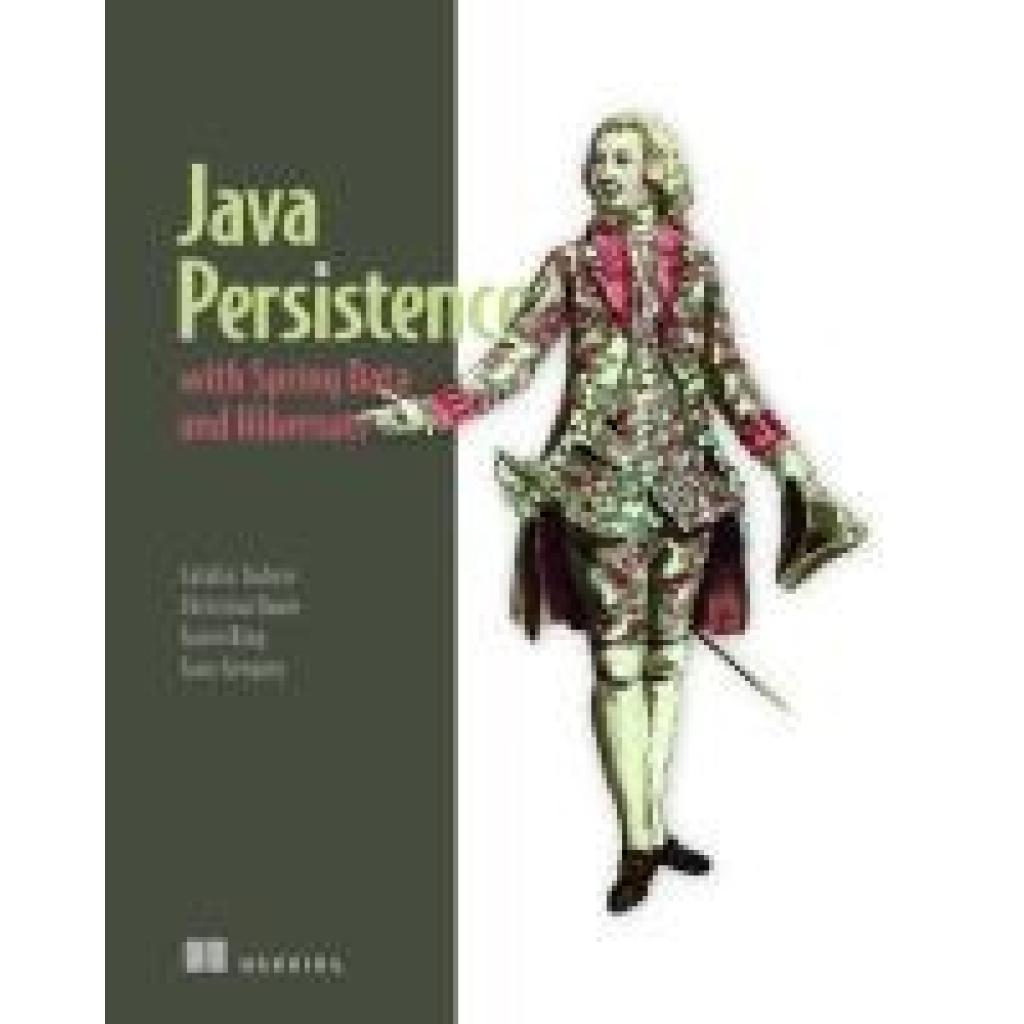
Tudose, Catalin: Java Persistence with Spring Data and HibernateJava Persistence with Spring Data and Hibernate , Master Java persistence using the industry-leading tools Spring Data and Hibernate. In Java Persistence with Spring Data and Hibernate you will learn: Mapping persistent classes, value types, and inheritance Mapping collections and entity associations Processing transactions with Spring Data and Hibernate Creating fetch plans, strategies, and profiles Filtering data Building Spring Data REST projects Using Java persistence with non-relational databases Querying JPA with QueryDSL Testing Java persistence applications Java Persistence with Spring Data and Hibernate teaches you the ins-and-outs of Java persistence with hands-on examples using Spring Data, JPA, and Hibernate. The book carefully analyzes the capabilities of the major Java persistence tools, and guides you through the most common use cases. By comparing and contrasting the alternatives, you’ll find it easy to choose the right tool choice for your applications. You’ll learn how to make and utilize mapping strategies, about the different approach to transactions for both Hibernate and Spring Data, and even how to efficiently test Java persistence applications. The practical techniques are demonstrated with both relational and non-relational databases. Forewords by Dmitry Aleksandrov and Mohamed Taman. Purchase of the print book includes a free eBook in PDF, Kindle, and ePub formats from Manning Publications. About the technology Effectively managing application data is essential for any serious application. Spring Data and Hibernate bridge the gap between object-oriented code and relational data stores, radically simplifying Java persistence. By implementing the Java Persistence API (JPA) standard, these powerful tools help you avoid common bugs related to state and application data storage. About the book Java Persistence with Spring Data and Hibernate explores Java persistence using industry-standard tools. Hands-on examples introduce object-relational mapping and guide you through different mapping strategies to suit your needs. Covering transactions, persistent application testing, and non-relational databases, this book is your go-to resource for managing data in Java applications. What's inside Mapping persistent classes, value types, and inheritance Creating fetch plans, strategies, and profiles Building Spring Data REST projects Querying JPA with QueryDSL About the reader For intermediate Java programmers. About the author Catalin Tudose has more than 20 years of experience in the Java community. Christian Bauer , Gavin King , and Gary Gregory are the authors of Java Persistence with Hibernate, Second Edition , on which this book is based. Table of Contents PART 1 - GETTING STARTED WITH ORM 1 Understanding object/relational persistence 2 Starting a project 3 Domain models and metadata 4 Working with Spring Data JPA PART 2 - MAPPING STRATEGIES 5 Mapping persistent classes 6 Mapping value types 7 Mapping inheritance 8 Mapping collections and entity associations 9 Advanced entity association mappings PART 3 - TRANSACTIONAL DATA PROCESSING 10 Managing data 11 Transactions and concurrency 12 Fetch plans, strategies, and profiles 13 Filtering data PART 4 - BUILDING JAVA PERSISTENCE APPLICATIONS WITH SPRING 14 Integrating JPA and Hibernate with Spring 15 Working with Spring Data JDBC 16 Working with Spring Data REST PART 5 - BUILDING JAVA PERSISTENCE APPLICATIONS WITH SPRING 17 Working with Spring Data MongoDB 18 Working with Hibernate OGM PART 6 - WRITING QUERIES AND TESTING JAVA PERSISTENCE APPLICATIONS 19 Querying JPA with Querydsl 20 Testing Java persistence applications , > , Erscheinungsjahr: 20230213, Produktform: Kartoniert, Autoren: Tudose, Catalin~Bauer, Christian~King, Gavin, Seitenzahl/Blattzahl: 562, Themenüberschrift: COMPUTERS / Databases / General~COMPUTERS / Programming / Object Oriented~COMPUTERS / Programming Languages / Java, Keyword: JPA; REST; JDBC; QueryDSL; object relational mapping; querying; non-relational databases; testing; fetch plans; profiles; entity associations; inheritance, Fachschema: Objektorientiert (EDV)~Microsoft SharePoint (WebServices, Portal)~Web Services (EDV)~Programmiersprachen~Database~Datenbank~Intelligenz / Künstliche Intelligenz~KI~Künstliche Intelligenz - AI~Übersetzung, Fachkategorie: Objektorientierte Programmierung (OOP)~Programmier- und Skriptsprachen, allgemein~Datenbanken~Natürliche Sprachen und maschinelle Übersetzung, Warengruppe: HC/Programmiersprachen, UNSPSC: 49019900, Warenverzeichnis für die Außenhandelsstatistik: 49019900, Länge: 233, Breite: 187, Höhe: 35, Gewicht: 1162, Produktform: Kartoniert, Genre: Importe,53,99 €*Versand: 0,00 €Sichere Weiterleitung zum Anbieter

-
Wie fange ich mit Game Development an?
Um mit Game Development zu beginnen, solltest du zuerst eine Programmiersprache erlernen, wie zum Beispiel C# oder Python. Danach kannst du dich mit einer Game Development Engine wie Unity oder Unreal Engine vertraut machen und Tutorials oder Kurse besuchen, um die Grundlagen des Game Developments zu erlernen. Es ist auch hilfreich, eigene kleine Projekte zu starten, um praktische Erfahrungen zu sammeln und dein Portfolio aufzubauen. **
-
Wie fängt man mit Game Development an?
Um mit Game Development zu beginnen, solltest du zuerst eine Programmiersprache wie C++, C# oder JavaScript lernen. Dann kannst du eine Game Development Engine wie Unity oder Unreal Engine verwenden, um Spiele zu erstellen. Es ist auch hilfreich, sich mit den Grundlagen des Game Designs und der Spielmechanik vertraut zu machen. **
-
Ist Nvidia besser als AMD für Game Development?
Es gibt keine eindeutige Antwort auf diese Frage, da sowohl Nvidia als auch AMD ihre eigenen Vor- und Nachteile haben. Nvidia hat in der Regel eine bessere Leistung und Unterstützung für Game Development-Tools wie CUDA. AMD hingegen bietet oft eine bessere Preis-Leistung und hat in den letzten Jahren mit ihrer Radeon-Grafikkartenlinie aufgeholt. Letztendlich hängt die Wahl zwischen Nvidia und AMD von den spezifischen Anforderungen des Game Developments und dem Budget ab. **
-
Welche Bücher gibt es zum Thema Game Development?
Es gibt eine Vielzahl von Büchern zum Thema Game Development, die sich mit verschiedenen Aspekten des Themas befassen. Einige beliebte Bücher sind "The Art of Game Design" von Jesse Schell, "Game Programming Patterns" von Robert Nystrom und "Unity in Action" von Joe Hocking. Diese Bücher bieten eine umfassende Einführung in die Grundlagen des Game Developments und geben praktische Tipps und Anleitungen für die Umsetzung eigener Spiele. **

Wie wird das Thema Game Development im Informatikstudium behandelt?
Im Informatikstudium wird das Thema Game Development in der Regel als Spezialisierung oder Wahlfach angeboten. Die Studierenden lernen dabei, wie man Computerspiele konzipiert, entwickelt und programmiert. Es werden sowohl theoretische als auch praktische Kenntnisse vermittelt, um komplexe Spiele mit verschiedenen Technologien und Programmiersprachen zu erstellen. Oftmals werden auch Themen wie Game Design, Grafik- und Audiosysteme sowie Künstliche Intelligenz im Zusammenhang mit Game Development behandelt. **
Welche Tools eignen sich für Einsteiger im Game Development?
Für Einsteiger im Game Development eignen sich Tools wie Unity oder Unreal Engine. Diese bieten eine benutzerfreundliche Oberfläche und eine große Community, die bei Fragen und Problemen helfen kann. Zudem gibt es viele Tutorials und Ressourcen, die den Einstieg erleichtern. **
Top-Angebote
Produkte zum Begriff Java-Game-Development-with:
-
Tudose, Catalin: Java Persistence with Spring Data and HibernateJava Persistence with Spring Data and Hibernate , Master Java persistence using the industry-leading tools Spring Data and Hibernate. In Java Persistence with Spring Data and Hibernate you will learn: Mapping persistent classes, value types, and inheritance Mapping collections and entity associations Processing transactions with Spring Data and Hibernate Creating fetch plans, strategies, and profiles Filtering data Building Spring Data REST projects Using Java persistence with non-relational databases Querying JPA with QueryDSL Testing Java persistence applications Java Persistence with Spring Data and Hibernate teaches you the ins-and-outs of Java persistence with hands-on examples using Spring Data, JPA, and Hibernate. The book carefully analyzes the capabilities of the major Java persistence tools, and guides you through the most common use cases. By comparing and contrasting the alternatives, you’ll find it easy to choose the right tool choice for your applications. You’ll learn how to make and utilize mapping strategies, about the different approach to transactions for both Hibernate and Spring Data, and even how to efficiently test Java persistence applications. The practical techniques are demonstrated with both relational and non-relational databases. Forewords by Dmitry Aleksandrov and Mohamed Taman. Purchase of the print book includes a free eBook in PDF, Kindle, and ePub formats from Manning Publications. About the technology Effectively managing application data is essential for any serious application. Spring Data and Hibernate bridge the gap between object-oriented code and relational data stores, radically simplifying Java persistence. By implementing the Java Persistence API (JPA) standard, these powerful tools help you avoid common bugs related to state and application data storage. About the book Java Persistence with Spring Data and Hibernate explores Java persistence using industry-standard tools. Hands-on examples introduce object-relational mapping and guide you through different mapping strategies to suit your needs. Covering transactions, persistent application testing, and non-relational databases, this book is your go-to resource for managing data in Java applications. What's inside Mapping persistent classes, value types, and inheritance Creating fetch plans, strategies, and profiles Building Spring Data REST projects Querying JPA with QueryDSL About the reader For intermediate Java programmers. About the author Catalin Tudose has more than 20 years of experience in the Java community. Christian Bauer , Gavin King , and Gary Gregory are the authors of Java Persistence with Hibernate, Second Edition , on which this book is based. Table of Contents PART 1 - GETTING STARTED WITH ORM 1 Understanding object/relational persistence 2 Starting a project 3 Domain models and metadata 4 Working with Spring Data JPA PART 2 - MAPPING STRATEGIES 5 Mapping persistent classes 6 Mapping value types 7 Mapping inheritance 8 Mapping collections and entity associations 9 Advanced entity association mappings PART 3 - TRANSACTIONAL DATA PROCESSING 10 Managing data 11 Transactions and concurrency 12 Fetch plans, strategies, and profiles 13 Filtering data PART 4 - BUILDING JAVA PERSISTENCE APPLICATIONS WITH SPRING 14 Integrating JPA and Hibernate with Spring 15 Working with Spring Data JDBC 16 Working with Spring Data REST PART 5 - BUILDING JAVA PERSISTENCE APPLICATIONS WITH SPRING 17 Working with Spring Data MongoDB 18 Working with Hibernate OGM PART 6 - WRITING QUERIES AND TESTING JAVA PERSISTENCE APPLICATIONS 19 Querying JPA with Querydsl 20 Testing Java persistence applications , > , Erscheinungsjahr: 20230213, Produktform: Kartoniert, Autoren: Tudose, Catalin~Bauer, Christian~King, Gavin, Seitenzahl/Blattzahl: 562, Themenüberschrift: COMPUTERS / Databases / General~COMPUTERS / Programming / Object Oriented~COMPUTERS / Programming Languages / Java, Keyword: JPA; REST; JDBC; QueryDSL; object relational mapping; querying; non-relational databases; testing; fetch plans; profiles; entity associations; inheritance, Fachschema: Objektorientiert (EDV)~Microsoft SharePoint (WebServices, Portal)~Web Services (EDV)~Programmiersprachen~Database~Datenbank~Intelligenz / Künstliche Intelligenz~KI~Künstliche Intelligenz - AI~Übersetzung, Fachkategorie: Objektorientierte Programmierung (OOP)~Programmier- und Skriptsprachen, allgemein~Datenbanken~Natürliche Sprachen und maschinelle Übersetzung, Warengruppe: HC/Programmiersprachen, UNSPSC: 49019900, Warenverzeichnis für die Außenhandelsstatistik: 49019900, Länge: 233, Breite: 187, Höhe: 35, Gewicht: 1162, Produktform: Kartoniert, Genre: Importe,53,99 €*Versand: 0,00 €Sichere Weiterleitung zum Anbieter
-
Was ist Game Development 2?
Game Development 2 ist ein weiterführender Kurs oder eine Fortgeschrittenenstufe im Bereich der Spieleentwicklung. In diesem Kurs werden fortgeschrittene Techniken und Konzepte des Game Designs und der Programmierung behandelt, um komplexe und anspruchsvolle Spiele zu entwickeln. Es kann auch Themen wie 3D-Grafik, Künstliche Intelligenz oder Multiplayer-Entwicklung abdecken. **
-
Wo liegt der Unterschied zwischen Game Design und Game Development?
Game Design bezieht sich auf die Konzeption und Gestaltung von Videospielen, einschließlich der Entwicklung von Spielmechaniken, Level-Design, Storytelling und Charakterentwicklung. Game Development hingegen bezieht sich auf die eigentliche Programmierung und Umsetzung des Spiels, einschließlich der Entwicklung von Code, Grafiken, Sound und Benutzeroberfläche. Während Game Design sich auf die kreative Seite des Spiels konzentriert, liegt der Fokus beim Game Development auf der technischen Umsetzung. **
-
Wie fange ich mit Game Development an?
Um mit Game Development zu beginnen, solltest du zuerst eine Programmiersprache erlernen, wie zum Beispiel C# oder Python. Danach kannst du dich mit einer Game Development Engine wie Unity oder Unreal Engine vertraut machen und Tutorials oder Kurse besuchen, um die Grundlagen des Game Developments zu erlernen. Es ist auch hilfreich, eigene kleine Projekte zu starten, um praktische Erfahrungen zu sammeln und dein Portfolio aufzubauen. **
-
Wie fängt man mit Game Development an?
Um mit Game Development zu beginnen, solltest du zuerst eine Programmiersprache wie C++, C# oder JavaScript lernen. Dann kannst du eine Game Development Engine wie Unity oder Unreal Engine verwenden, um Spiele zu erstellen. Es ist auch hilfreich, sich mit den Grundlagen des Game Designs und der Spielmechanik vertraut zu machen. **
Ähnliche Suchbegriffe für Java-Game-Development-with
-
Mastering Game Development with PyGame, Fachbücher von Kameron Hussain, Frahaan Hussain"Mastering Game Development with PyGame: From Basics to Advanced Techniques" ist ein umfassendes Fachbuch, das sich an angehende und erfahrene Spielentwickler richtet, die das Python-basierte PyGame-Framework nutzen möchten. Dieses Buch führt die Leser durch die grundlegenden Konzepte der Spielentwicklung bis hin zu fortgeschrittenen Techniken, die dazu beitragen, Spiele auf ein neues Niveau zu heben. Es bietet praktische Beispiele, reale Projekte und Schritt-für-Schritt-Anleitungen, die alle Aspekte der Spielentwicklung mit PyGame abdecken. Die Leser lernen, wie sie ihre Entwicklungsumgebung einrichten, eine Spielschleife erstellen und Benutzereingaben verarbeiten. Darüber hinaus werden wichtige Themen wie 2D-Grafiken, Kollisionserkennung, Spielphysik und Sound behandelt. "Mastering Game Development with PyGame" vermittelt das Wissen und die Fähigkeiten, um eigene Spielideen zu verwirklichen, sei es für Indie-Spiele, Bildungstools oder interaktive Simulationen.32,70 €*Versand: 0,00 €Sichere Weiterleitung zum Anbieter
-
Ist Nvidia besser als AMD für Game Development?
Es gibt keine eindeutige Antwort auf diese Frage, da sowohl Nvidia als auch AMD ihre eigenen Vor- und Nachteile haben. Nvidia hat in der Regel eine bessere Leistung und Unterstützung für Game Development-Tools wie CUDA. AMD hingegen bietet oft eine bessere Preis-Leistung und hat in den letzten Jahren mit ihrer Radeon-Grafikkartenlinie aufgeholt. Letztendlich hängt die Wahl zwischen Nvidia und AMD von den spezifischen Anforderungen des Game Developments und dem Budget ab. **
-
Welche Bücher gibt es zum Thema Game Development?
Es gibt eine Vielzahl von Büchern zum Thema Game Development, die sich mit verschiedenen Aspekten des Themas befassen. Einige beliebte Bücher sind "The Art of Game Design" von Jesse Schell, "Game Programming Patterns" von Robert Nystrom und "Unity in Action" von Joe Hocking. Diese Bücher bieten eine umfassende Einführung in die Grundlagen des Game Developments und geben praktische Tipps und Anleitungen für die Umsetzung eigener Spiele. **
-
Wie wird das Thema Game Development im Informatikstudium behandelt?
Im Informatikstudium wird das Thema Game Development in der Regel als Spezialisierung oder Wahlfach angeboten. Die Studierenden lernen dabei, wie man Computerspiele konzipiert, entwickelt und programmiert. Es werden sowohl theoretische als auch praktische Kenntnisse vermittelt, um komplexe Spiele mit verschiedenen Technologien und Programmiersprachen zu erstellen. Oftmals werden auch Themen wie Game Design, Grafik- und Audiosysteme sowie Künstliche Intelligenz im Zusammenhang mit Game Development behandelt. **
-
Welche Tools eignen sich für Einsteiger im Game Development?
Für Einsteiger im Game Development eignen sich Tools wie Unity oder Unreal Engine. Diese bieten eine benutzerfreundliche Oberfläche und eine große Community, die bei Fragen und Problemen helfen kann. Zudem gibt es viele Tutorials und Ressourcen, die den Einstieg erleichtern. **
* Alle Preise verstehen sich inklusive der gesetzlichen Mehrwertsteuer und ggf. zuzüglich Versandkosten. Die Angebotsinformationen basieren auf den Angaben des jeweiligen Shops und werden über automatisierte Prozesse aktualisiert. Eine Aktualisierung in Echtzeit findet nicht statt, so dass es im Einzelfall zu Abweichungen kommen kann. ** Hinweis: Teile dieses Inhalts wurden von KI erstellt.